Mercedes-Benz W123 got a more rounded body and less chrome
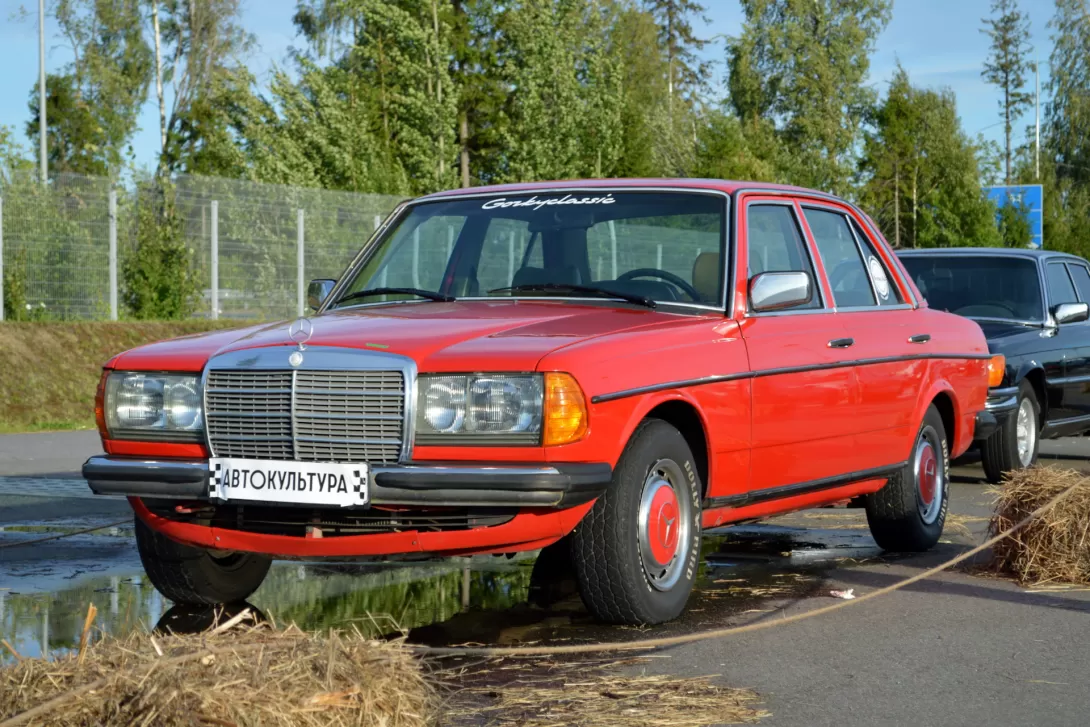
Mercedes unveiled the W123 in January 1976
The first batch of W123s sold out through pre-orders before sales even began. The Mercedes-Benz sedan featured horizontal headlight clusters, more steeply raked windows and large, ribbed rear lights whose signals remained visible even when dirty.
In Stuttgart, work on the W115’s successor included a new body, suspension systems and engines, including rotary and eight-cylinder units. But the 1973 oil crisis disrupted those plans.
The W123’s final design was approved in 1973, when Friedrich Geiger headed the styling department. As chief engineer Hans Scherenberg explained, the team was tasked with creating “a balanced, dynamic and non-aggressive appearance — one that gives these cars their distinctive character.” The designers emphasised horizontal lines at the front and rear, gave the profile a subtle wedge shape, reduced the amount of chrome trim and made the contours more rounded. Scherenberg explained the approach this way: “We are impressed neither by revolutionary leaps in styling nor by fleeting fashion gimmicks.”
Bruno Sacco became chief stylist at Mercedes-Benz in 1975 and remained in the role until 1999, but he was not the sole designer of the W123.