Autocar test exposes Ford Transit City's shortcomings on the motorway
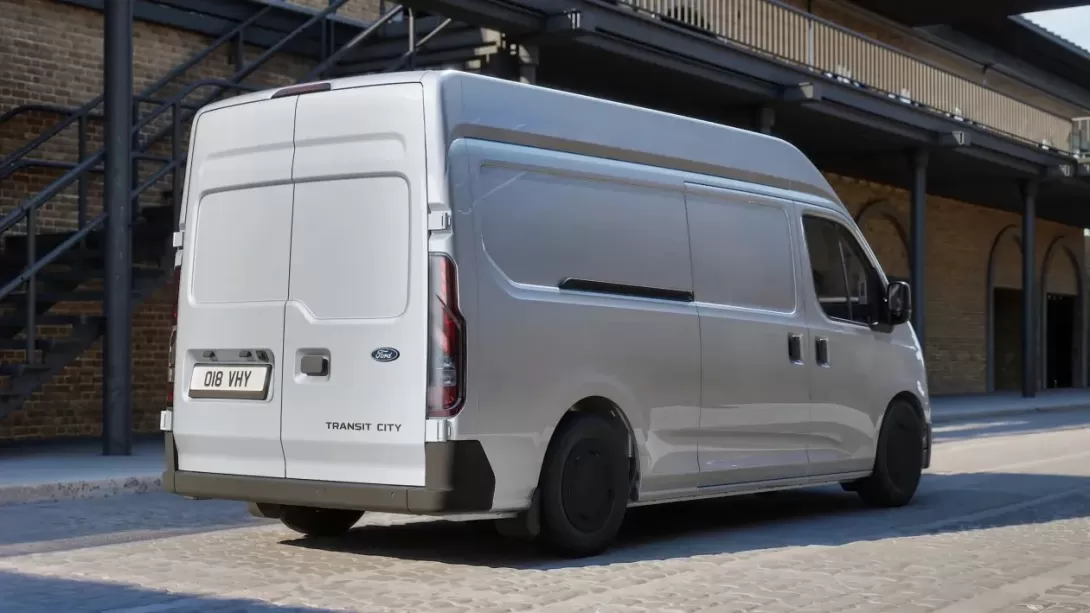
Autocar test exposes Ford Transit City's shortcomings on faster roads
The electric Ford Transit City is better suited to urban work than faster roads, an Autocar test has found. In the UK market, the van competes on price with the Kia PV5 once the government grant for electric vans is taken into account.
Ford Transit City: motorway comfort and energy consumption
With a 400–450 kg load, the testers recorded urban energy consumption of around 15.9 kWh per 100 km. On the motorway, the van used considerably more energy. At high speeds, there was wind noise around the A-pillars and doors, while the steering lacked precision and feedback. These shortcomings were less noticeable in town.
The van slows noticeably when the accelerator is released, even in Normal mode. One-Pedal Drive mode increases regenerative braking and, in the testers' view, suits stop-start driving, but requires careful accelerator inputs to maintain smooth progress. The electric motor produces around 110 kW and 260 Nm, and the testers found acceleration livelier than they had expected from a van with these specifications.
Inside the cab, the steering wheel has no adjustment, and the testers described the driver's seat as firm. However, the seat offered enough adjustment to find a comfortable driving position. A grab handle on the A-pillar would make climbing aboard easier, while the seat belt buckle got in the way in the outer passenger seat. Visibility was rated positively.
Ford Transit City: production and load capacity
The Transit City is built by JMC in Nanchang, China, on the JMC Touring platform. Ford has worked with the manufacturer for more than 30 years, but substantially reworked the van's design for the European market. The company changed everything ahead of the A-pillars, developed a new high-voltage battery system and revised the chassis tuning, safety and ergonomics.
The model shares no components with the E-Transit Custom, its closest counterpart in size. The L1H1 version has a payload of 1,085 kg and accommodates 6.4 m³ of cargo, while the L2H2 is rated for 1,275 kg and up to 8.5 m³. The larger version has a gross vehicle weight of 3.3 tonnes rather than the model's usual 3.0 tonnes. The E-Transit Custom offers a maximum load volume of 6.8 m³, so the taller Transit City L2H2 has more cargo space.
CATL supplies the 56 kWh lithium iron phosphate battery. Peak charging power is 87 kW. Charging from 10 to 100% takes just over five hours on an 11 kW three-phase AC supply.
The van is offered in a single trim level, with two body sizes and four colours. Standard equipment includes a 12-inch touchscreen with Apple CarPlay and Android Auto, air conditioning, keyless start, a heated driver's seat and adaptive cruise control. Buyers can also specify Ford Pro telematics to monitor vehicle use, driving style and vehicle condition.
The Transit City is not suitable for use with a trailer, as it is not rated for towing. This restriction applies regardless of body size: the van's load-carrying capabilities are limited to cargo carried inside the vehicle itself.