Dacia Spring moves to Renault platform as Slovenian production planned
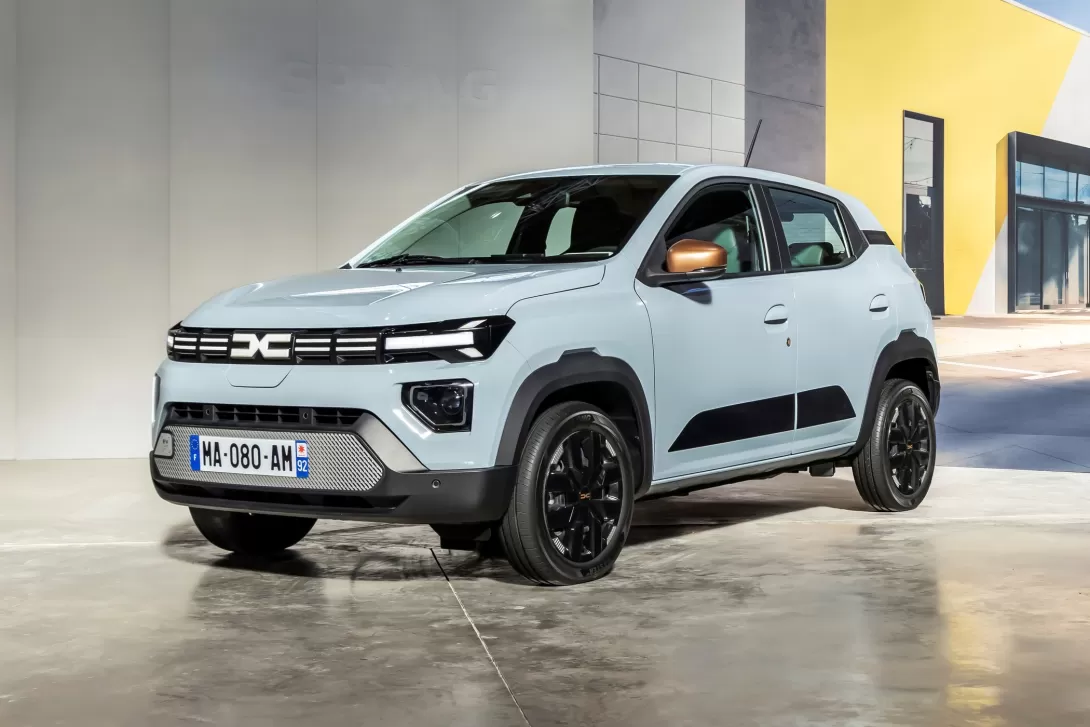
Dacia Spring switches platforms, grows in size and prepares for production in Slovenia
The second-generation Dacia Spring offers more space and retains physical controls, Autocar reports following a test drive. Two charging rates have been announced for the UK market, while production of the electric car is planned for Slovenia alongside related models.
Dacia Spring moves to the RG-EV platform, gains space and gets an LFP battery
The new Spring is built on Renault Group’s RG-EV platform for small electric cars. It measures 3,855 mm long and 1,722 mm wide, with a wheelbase of 2,492 mm. Compared with its predecessor, the car has grown in every major dimension except height.
The dashboard closely resembles that of the Renault Twingo and is made of hard plastic. The entry-level model has no central screen, while more expensive versions get a 10.1-inch touchscreen without built-in Google services. Physical dials and buttons still control the ventilation. A My Safety button lets drivers switch off various driver assistance systems.
According to the reviewer’s measurements, shoulder room has increased from 117 to 139 cm in the front and from 114 to 132 cm in the rear. Legroom has grown more modestly, from 64 to 68 cm. The two separate rear seats lack the Twingo’s sliding adjustment because the engineers opted to leave more room for luggage.
The Spring has a longer rear overhang than the Renault that shares its platform, allowing for a larger boot. It holds 337 litres, including the space beneath the floor. There is a separate 18-litre compartment under the bonnet for charging cables.
The lithium iron phosphate battery has a usable capacity of 27.5 kWh. Claimed WLTP range is around 249 km, roughly 23 km more than the previous Spring. However, it falls about 13 km short of the Twingo’s figure.
The reviewer attributes the difference in range to the larger body, an extra 13 kg of weight and poorer aerodynamics. The Spring’s drag coefficient is 0.318, compared with the Twingo’s 0.295. All UK versions will support 11 kW charging at home and 50 kW at public charging stations.
The electric car tested produces around 60 kW and 275 Nm. During the drive, that was enough to keep pace with traffic in town and on country roads. Its turning circle is less than 10 m, and rear parking sensors and an electric parking brake are standard even on the entry-level model. The more expensive version has push-button starting, while the lower-spec model retains an ignition key.
Slovenian production will avoid EU tariffs and keep the price below the Renault Twingo’s
The second-generation Spring was developed by a dedicated team brought together in Shanghai. Development took less than two years and ran alongside work on the Renault Twingo and Nissan Pixo. Dacia is part of Renault Group, and sales of the first Spring have exceeded 210,000 cars since 2021.
Production of the new model is planned for Slovenia alongside related cars from the group. Building it in Slovenia will avoid the EU tariffs imposed on the previous generation. The car itself will, however, cost more to manufacture.
Preliminary estimates suggest the Spring will cost around £1,700 less than the Renault Twingo in the UK. That calculation is based on European prices rather than a confirmed UK price list. The final price for UK buyers will depend on the size of the government electric car grant approved.